




A delivery robot, street-cleaning machine, or autonomous bus needs more than software. It needs a city built with clear paths, safe stopping places, reliable maps, and rules that people can follow. That could change urban design first at the curb, then across streets and public spaces.
Quick read
- Curb space may need marked zones for deliveries, pickups, charging, and waste collection.
- Sidewalks will need clear widths, smooth surfaces, and fewer blocked routes.
- Cities will still need staff, rules, and remote help when machines meet unusual conditions.
The curb becomes working space
Today, one stretch of curb may serve buses, taxis, bicycles, private cars, delivery vans, waste trucks, and pedestrians.
Autonomous machines add more demands without adding much street space. A delivery robot may need a safe place to stop, while an autonomous shuttle needs a marked boarding point that people can reach without crossing moving traffic.
That pushes planners toward clearer curb rules. A city could mark short-stay loading areas, restrict parking at certain times, or reserve space for shared vehicles. The useful change is easy to see: fewer machines stopping in travel lanes, and fewer people stepping around them.
The design work will need to match local needs. A dense business district may need timed loading zones. A residential area may need space for waste robots or accessible passenger boarding. One layout won’t suit every street.
Sidewalks need machine-ready details
Autonomous machines read streets through cameras, LiDAR, maps, and other sensors. LiDAR measures distance with light pulses, helping a machine spot walls, poles, and people. Those systems work better when the physical route is clear and the map matches the street.
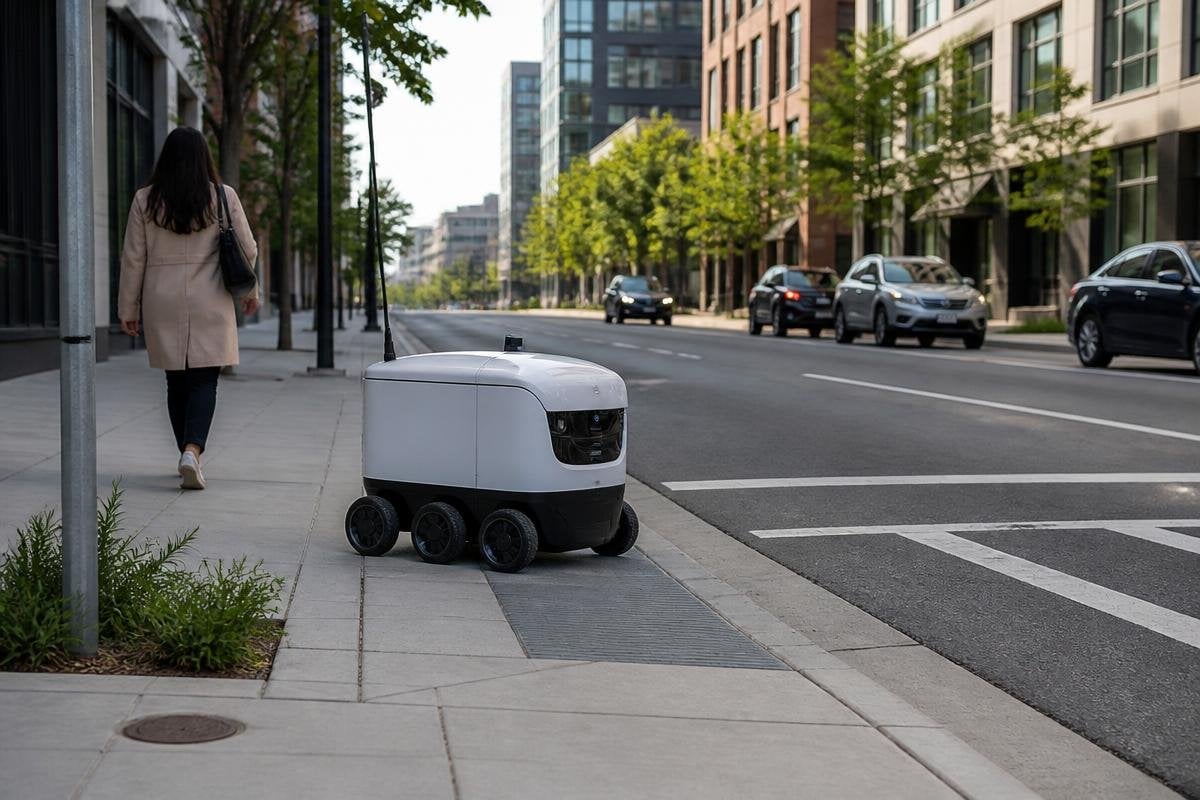
Small design choices can matter. A broken pavement edge can slow a delivery robot. A temporary sign can block a sensor view. A café chair placed across a narrow path can force a machine into a difficult turn or stop it altogether.
This gives cities a practical reason to inspect sidewalks as operating routes, not only as pedestrian space. Planners may need consistent curb ramps, clear signs, marked crossings, and access to charging points. Robot routes also need a way to handle roadworks, blocked paths, and emergency vehicles.
A blocked sidewalk can stop a delivery robot, so urban plans need a safe backup route and a clear stop rule. Reports on autonomous systems from Robot24 can add machine and city details before the next section looks at what happens when the planned path fails.
Public space needs fallback plans
Autonomy works best when the machine can sense its surroundings and choose from known actions. Urban spaces rarely stay fixed. Markets, sports events, construction work, heavy rain, and crowds can change a route within minutes.
Cities will need a human response when the machine reaches a situation its software cannot handle. That may mean a remote operator, a police or transit control room, or a local worker who can move the machine safely. The system also needs clear rules for stopping, reporting faults, and giving way to people.
Data creates another design issue. Cameras and location systems can record movement around stations, streets, and buildings. City contracts should state what data the machine collects, how long it stays stored, and who can access it. Those details affect public trust as much as the machine’s speed or battery life.
I’d be cautious about redesigning whole districts around autonomous machines before a city can show safe operation on a small route through changing conditions.
A planning checklist
Before approving an autonomous service, a city team should check:
- Route quality: Can the machine use the path with its stated width, slope, surface, and crossing rules?
- Curb access: Where can it stop, wait, charge, or unload without blocking people or emergency vehicles?
- Failure response: Who receives an alert when the machine stops, loses its map, or meets an obstacle?
- Public data: What images, location records, or trip details are collected, and when are they deleted?
- Street changes: How will roadworks, events, weather, and temporary barriers reach the machine’s map?
These checks turn a broad urban technology plan into a street-level design task. They also show where a machine may save labor and where the city still needs people to manage exceptions.
The first useful projects will probably be small: one delivery zone, one campus route, or one transit corridor with measured results. If those sites reduce blocked lanes and keep people moving safely, autonomous machines may earn more space in the city one route at a time.